
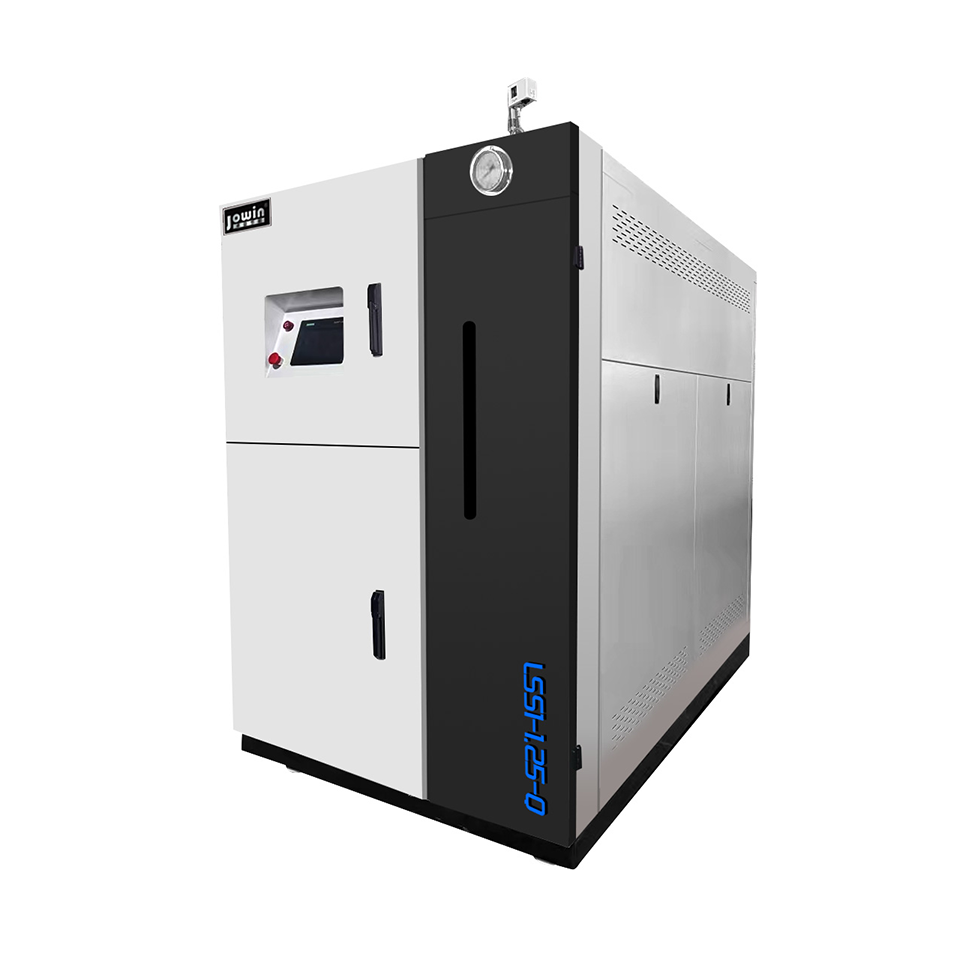
This guide covers commercial steam generators for food processing plants, central kitchens, and catering operations. It compares electric vs gas types, cites GB 150 and GB 50016 standards, and lists 12 technical parameters to verify before procurement in 2026.
What Is a Commercial Steam Generator and Why Food Processing Plants Need It
A commercial steam generator heats water to produce saturated steam that drives cleaning, blanching, sterilization, cooking, and pasteurization processes in food processing plants and central kitchens. Unlike residential boilers, commercial steam generators must comply with GB 150 (Pressure Vessels) and GB 50016 (Fire Protection Code), with rated steam output typically ranging from 50 kg/h to 500 kg/h and working pressures reaching 0.7 MPa to 1.25 MPa.
During the acceptance inspection of a central kitchen producing 120,000 meals per day in a provincial capital in East China, the舜翔央厨 engineering team found that the selected gas steam generator's thermal efficiency was overstated — actual steam output was 18% below the rated value, causing the steam box to take 40 minutes longer to reach working temperature, directly delaying lunch service.
Step 1: Confirm Steam Demand Parameters
Before selecting a model, three numbers must be determined: hourly steam demand (kg/h), working pressure (MPa), and daily operating hours (h). Common mistake: using "number of units × rated steam output per unit" to estimate total demand. The simultaneous use coefficient (probability of all steam-consuming equipment running at the same time) is typically 0.6-0.8. A central kitchen producing 5 tons of cooked food per day requires approximately 300 kg/h during peak hours but only 80 kg/h during low periods.
Electric vs Gas: Which Is Right for You
Electric steam generators (e.g., LSS1.2-1.25-Q, vertical, rated evaporation 1.2 t/h, power ~720 kW) and gas steam generators (e.g., MZQT60/07X6 modular gas type, 500 kg/h, natural gas pressure requirement 2.0 kPa) have fundamental differences:
| Parameter | Electric Steam Generator | Gas Steam Generator |
|---|---|---|
| Thermal Efficiency | ≥98% (nearly no exhaust loss) | ≥92% (affected by exhaust temperature) |
| Application | No gas supply or strict environmental zones | High steam volume, long runtime |
| Installation | Transformer capacity upgrade needed; significant cost above 500 kW | Gas pipeline and exhaust system required |
| Operating Cost | ~1.5-2× higher than gas when electricity price is high | Lower when natural gas price is stable |
| Startup Response | 5-10 minutes to rated pressure | 3-5 minutes to rated pressure |
| Typical Model | LSS1.2-1.25-Q (1.2 t/h, 720 kW) | MZQT60/07X6 (500 kg/h, natural gas) |
12 Technical Parameters to Verify Before Procurement
- Rated Evaporation: kg/h — actual value must be ≥95% of rated value
- Design Pressure: MPa — food processing plants typically select 0.7 MPa or 1.0 MPa
- Thermal Efficiency: % — electric ≥98%, gas ≥92%
- Fuel Consumption: Natural gas m³/h or electric power kW
- Feed Water Quality: GB/T 1576 requires resistivity ≥1 MΩ·cm, hardness ≤0.03 mmol/L
- Safety Valve Set Pressure: Must not exceed 1.1× design pressure
- Control Mode: Full proportional regulation vs stage-type combustion
- Feed Water Pump Flow: Must be ≥1.2× evaporation rate for continuous supply
- Blowdown Rate: ≤2% per shift; automatic blowdown valve is standard
- Noise Level: ≤85 dB(A) measured at 1 meter from equipment
- Water Volume: L — GB 150 exempts units with water volume <30 L from inspection
- Inspection Cycle: Internal inspection every 3 years; full pressure test every 6 years
Special Notes for Export Buyers
Steam generators exported to Southeast Asia, Middle East, and Africa must meet destination country standards: Indonesia SNI, Saudi SASO, Nigeria SONCAP, etc. Some countries require certificates of origin and material traceability documents. EU markets require CE/PED (Pressure Equipment Directive 2014/68/EU) — particularly weld NDT reports and material chemical composition sheets. Buyers should request EN 10204 3.1 material certificates.
Acceptance Checklist: 5 On-Site Tests
- Run for 30 minutes, record actual steam output (weighing or flowmeter method), deviation from rated value ≤5%
- Test safety valve opens automatically at design pressure ×1.1
- Check automatic water feed cut-off: burner must stop when water level is below warning line
- Test interlock protection: overpressure, flameout, gas leak — cutoff within 10 seconds
- Verify nameplate parameters match contract technical specifications, especially voltage (380V/400V/415V varies by region)
Common Selection Mistakes
Mistake 1: Checking only rated evaporation, ignoring thermal efficiency. Two gas steam generators both rated at 300 kg/h, one at 92% efficiency and one at 88%, produce 12 kg/h difference in actual output — costing approximately 10,000 m³ more natural gas per year.
Mistake 2: No margin reserved. Sizing at 100% load means equipment cannot handle peak periods. Correct approach: size at 85% of design load with 15% reserve.
Mistake 3: Ignoring water treatment. Without feed water treatment, scale buildup inside the steam generator reduces thermal efficiency 2%-3% annually — after 3 years, actual output drops to 85% of the new unit.
2026 Procurement Trends for Food Processing Steam Generators
According to procurement data from export-oriented food processing plants in South and East China, three clear trends emerged in 2025-2026: modular gas steam generators (250-500 kg/h units, can be paralleled) increased from 35% in 2023 to 55% of new purchases due to their adaptability for production peak-valley adjustment; electric proportional steam generators are growing significantly in Yangtze River Delta regions with strict environmental controls; integrated control systems (PLC + touch screen, remote monitoring support) have become a mandatory requirement for export equipment.