
A 2026 buyer's guide to commercial vegetable peelers for central kitchens: match 600-800 kg/h peak throughput to your line, choose between friction, brush and batch types, measure peel loss with weigh-back data, and run the 8-point FAT check before sign-off.
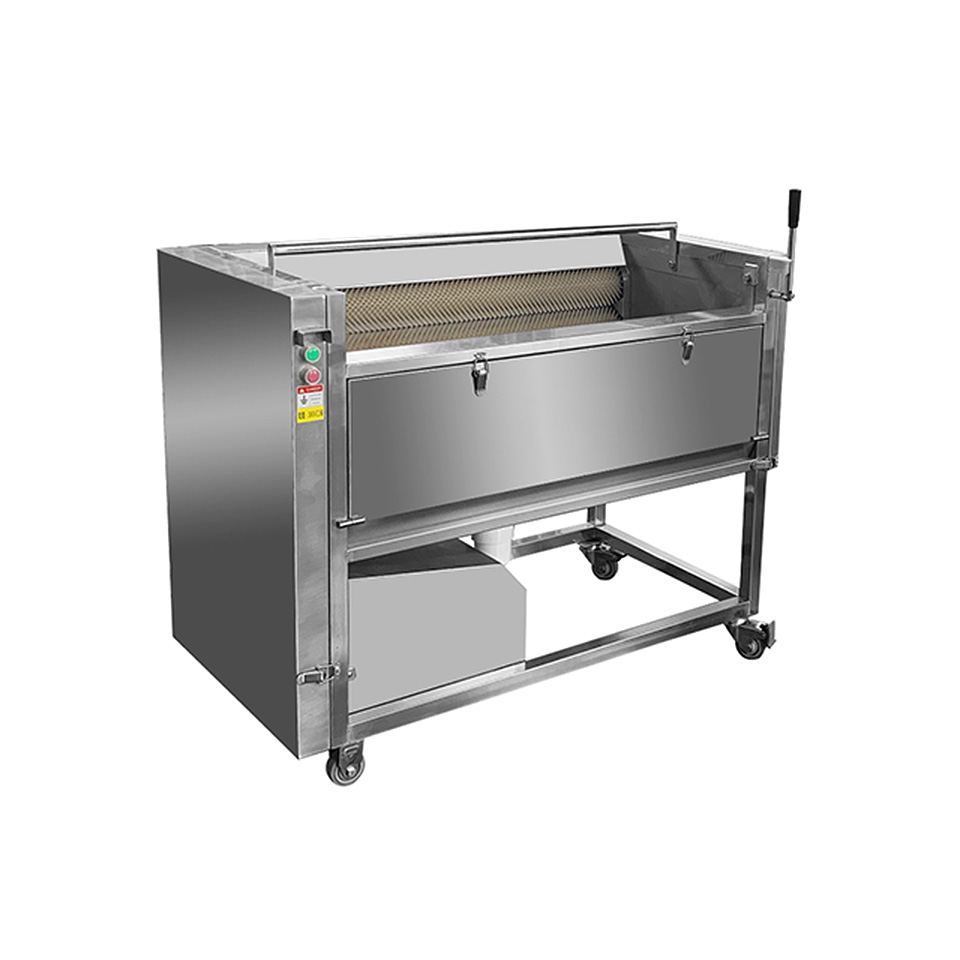
Jinan Shunxiang Central Kitchen (舜翔央厨, hymic.com) engineers vegetable prep lines and central kitchen equipment, and peeling is the stage buyers underestimate most. As of 2026, the peeler sets the pace, the peel loss and the quality of everything downstream. Take the DXC-1500 brush peeler: 600-800 kg/h output, 380V supply, an 1800×680×1000 mm footprint and 240 kg operating weight. Align numbers like these first; machine styling comes later.
Three numbers come before machine choice: throughput, raw material, peel-loss cap
Size the peeler on peak feed, not daily average. On a 30 t/day fresh-cut line, the peeling peak sits in the two to three hours after morning receiving, when potatoes and carrots arrive together — plan for the 600-800 kg/h class. A 300-400 kg/h unit becomes the bottleneck in the first busy season.
Raw material decides the machine type and the settings. Potatoes and radish — firm, regular root vegetables — run well through friction peelers. Carrots, sweet potatoes and ginger have thinner skins and irregular shapes; brush peelers treat them more gently. Re-check dwell time and spray volume when the variety changes seasonally.
The third number is the peel-loss cap, because it feeds straight into yield. Fix the weigh-back method in the acceptance terms: weigh produce in and out, divide the difference by input weight. Friction peeling of potatoes commonly lands at 8-12%; carrots and sweet potatoes run higher. Put the range in the contract — it is worth more than any visual inspection of the machine.
Friction vs brush vs batch: what each type is for
| Type | Best for | Capacity reference | Watch for |
|---|---|---|---|
| Friction | Firm, regular roots such as potatoes and radish | 500-750 kg/h | Bruises small sizes; accept with 3-grade sorting |
| Brush | Carrots, sweet potatoes, thin-skinned produce | 300-800 kg/h | Confirm bristle material and replacement cycle |
| Batch | Mixed products, small lots | from 10 kg per cycle | Verify real shift throughput, not catalog peaks |
Friction types grind the skin off against an abrasive surface: simple, high output per unit, but they cut deeper. Brush types combine nylon rollers with spray water: gentler, reliable on hollows and dimples, and the right choice when appearance matters. Batch machines suit central kitchens that run many products in small lots — not a continuous large line.
Five models side by side
| Model | Type | Capacity | Power | Voltage | Dimensions | Weight |
|---|---|---|---|---|---|---|
| DXC-1000 | Brush | 300-400 kg/h | 1.5 kW | 380V | 1300×680×1000 mm | 180 kg |
| DXC-1500 | Brush | 600-800 kg/h | 1.5 kW | 380V | 1800×680×1000 mm | 240 kg |
| BB-450 | Friction | 500-750 kg/h | 1.1 kW | 380V/50Hz | 600×810×1260 mm | 115 kg |
| TY-1000 | Brush | 500-800 kg/h | 1.1 kW | 380V/50Hz | 1200×680×980 mm | 110 kg |
| BB-XP | Batch | 10 kg/min | 0.75 kW | 380V | 1260×800×1350 mm | 95 kg |
Figures above are compiled from the product pages on hymic.com; verify them against supplier technical documents and the nameplate before ordering. Two items the table cannot show — control-box IP rating and spray-bar material — belong in the technical agreement.
Peel loss, water use, and over-peeling
Measure peel loss by shift, never from one basket of samples. On the same line, new-crop and stored potatoes can differ by three to five points; log three consecutive shifts before you judge.
Water use is the quiet cost. Keep spray pressure at 0.2-0.3 MPa rather than wide open, aim nozzles at the rollers and discharge, and route solids-laden water to a separate drain — never back into the wash-pool return. Where the site allows, settle and recirculate the flush water and keep fresh water for the downstream wash; monitor turbidity at a dedicated point — the same principle we set out in the washing-line water reuse checklist.
Over-peeling is the classic failure: tightening the machine until skins look perfect, then watching yield fall faster than defects. The test is direct — sort peeled produce into pass, light damage and heavy damage, then weigh. Above 5% heavy damage, re-tune the settings or change the machine type.
Hygiene and materials: write the standards into the agreement
Peelers run wet and gritty; hygiene design decides how long cleaning takes every day. GB 14881-2025 — published September 2025 and effective 2 September 2026 — tightens the requirements for facilities and equipment, including cleanability and drain sealing. Food-contact metals follow GB 4806.9-2023; 304 stainless is the baseline for food-contact surfaces, while 201 grades belong on non-contact shrouds — make the quote spell out a material list, not just the word "stainless". Machinery safety and hygiene requirements can be checked item by item against GB 16798-1997. For EU buyers, EC 1935/2004 and EN 1672-2 are the reference points for food-contact and hygiene design.
Four structural points to inspect: tool-free removal of brushes or discs, quick-release spray bars, drains without dead corners, and the control-box IP rating. Export orders also need nameplate and label language confirmed, plus food-contact compliance documents for the destination market.
The 8-point FAT checklist
- Run 30 minutes empty; listen for bearing or transmission noise and check vibration.
- Feed at rated load for 30 minutes; weigh output against the contracted throughput.
- Weigh-back peel loss on the same batch across three shifts; compare with the agreed cap.
- Sample residual peel after a pass; 3-grade sorting; fail if heavy damage exceeds 5%.
- Stop and inspect spray coverage — no blind zones on brushes or drum walls.
- Time brush, disc and spray-bar removal; over ten minutes fails the tool-free requirement.
- Pour a drum of water through the machine; check drain slope and solids clearing.
- Match material certificates to the nameplate; magnet-check food-contact 304 and file the documents.
Frequently asked questions
What throughput should I plan for?
Use peak feed plus a 20% margin. For a 30 t/day fresh-cut line, the peeling station usually sits in the 600-800 kg/h class.
Friction or brush peeler — which one?
Choose by your main raw material. Firm, regular potatoes and radish favour friction types; thin-skinned carrots and sweet potatoes run better through brush types. Mixed sites can pair one main unit with a small batch machine.
What peel loss is normal?
Potato friction peeling commonly lands at 8-12%, drifting with variety and season; carrots and sweet potatoes run higher. Judge against weigh-back data from the same batch, not one machine's feel.
How do I cut water consumption?
Set spray pressure at 0.2-0.3 MPa instead of wide open, recirculate settled flush water, and split the peeling circuit from the downstream wash. Monitor turbidity at a dedicated point.
What should an export buyer check before shipment?
Voltage and frequency (380V/50Hz or the destination standard), nameplate and label language, food-contact compliance documents, and moisture-proof export packing. List each item in the contract annex and tick them off at inspection.
Related products & resources
- DXC-1500 Brush Peeling Machine — 600-800 kg/h, the workhorse station for fresh-cut lines.
- DXC-1000 Peeling Machine — 300-400 kg/h for mid-size or twin-line layouts.
- BB-450 Friction Peeler — 500-750 kg/h in a 304 stainless body.
- TY-1000 Brush Peeler — 500-800 kg/h in a compact frame.
- BB-XP Potato Peeler — batch peeling at 10 kg/min for mixed menus.
- Vegetable Peeler Category — every model and specification in one place.
- Vegetable Washers Category — upstream and downstream equipment for the peeling station.
- Contact the Shunxiang Engineering Team — sizing advice for your raw material and throughput; more resources at hymic.com.
Author: 苏涛;舜翔央厨、华艺智能
Specifications and configuration ranges above are 2026 reference values; final selection is subject to the confirmed model, project requirements, supplier technical documents, quotation and contract.