

A fish line runs at the speed of its slowest station. The FK-500 kills 500 fish/h at 1.1 kW on 220V, 1–8 jin (0.5–4 kg) each; the XZ-160 gutting machine runs 2.2/1.5 kW on 220/380V at 850×670×850 mm; the horizontal washer is 1650×500×700 mm. Shift arithmetic, one spec sheet, six acceptance checks.
A fish line has three stations: killing, gutting, washing. The line runs at the speed of the slowest one, not at the sum of three nameplates. Jinan Shunxiang Central Kitchen Internet Technology Co., Ltd. is a China-based supplier of fish processing and central kitchen equipment, and we size these lines with seafood plants, central kitchens and contract caterers. Keep three sets of numbers on the table: the FK-500 fish killing machine runs 1.1 kW on 220V and handles 500 fish per hour at 1–8 jin (0.5–4 kg) each; the XZ-160 gutting machine runs 2.2/1.5 kW on 220V or 380V, 850×670×850 mm, 130 kg; the horizontal fish washer is 220V/50Hz, 1650×500×700 mm, 110 kg. Everything below is worked out from those figures.
Start from shift output, then pick the machine
Work in shift output. Five tonnes over an eight-hour shift is 625 kg/h. At 1 kg average, that is 625 fish per hour. The FK-500 is rated 500 fish/h, so one unit is 125 fish short.
The usual mistake is to order two units straight away. Ask first whether the volume is steady. If five tonnes is the normal day, two units run in parallel. If five tonnes is only the peak season, one unit plus overtime is cheaper. A machine that sits idle still takes floor space, power connection and maintenance time.
| Shift output (8 h) | Average fish weight | Fish per hour | FK-500 units |
|---|---|---|---|
| 3 t | 1 kg | 375 | 1 |
| 5 t | 1 kg | 625 | 2 |
| 5 t | 2 kg | 313 | 1 |
| 8 t | 1.5 kg | 667 | 2 |
Read rows two and three together. Same five tonnes, average weight moves from 1 kg to 2 kg, the fish count halves, and one machine is enough. Fish machines are rated in pieces, not tonnes. Ask for the average weight before you ask for a price.
Fish size is the hard limit
The FK-500 is specified for 1–8 jin, which is 0.5–4 kg. Below 0.5 kg, the infeed channel and the hold-down wheel need a smaller set, otherwise the fish turns sideways and stops feeding. Above 4 kg, the throat jams. Test both ends with real fish from your own plant, not with one sample size.
On the gutting machine, the knife set is matched to body length. The XZ-160 datasheet does not state a fixed capacity, so confirm it on trial: cut position, viscera residue, and damage rate. Damage rate is the one buyers forget, and it goes straight to yield. Every extra point of damage is a point of yield lost, and that adds up over a month.
Three machines on one sheet
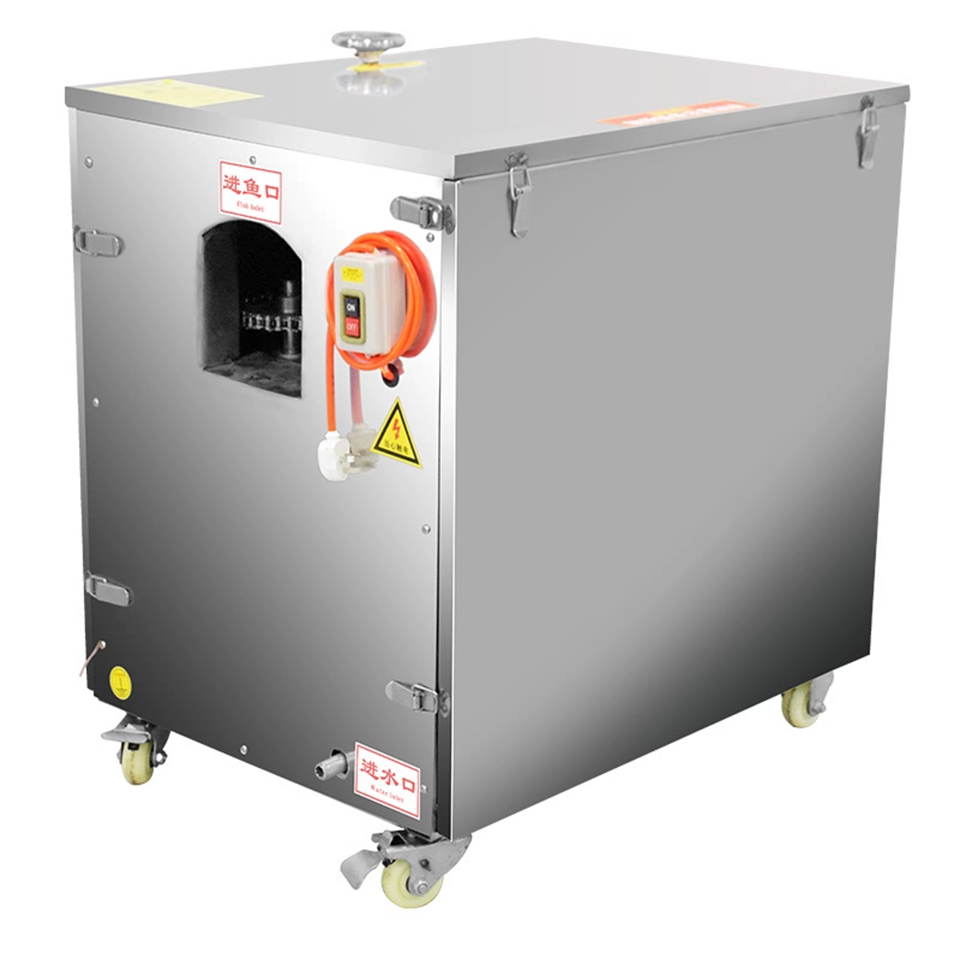
| Item | FK-500 killing machine | XZ-160 gutting machine | Horizontal washer |
|---|---|---|---|
| Power | 1.1 kW | 2.2/1.5 kW | Not stated on datasheet |
| Voltage | 220V | 220V/380V | 220V/50Hz |
| Dimensions | 580×560×850 mm | 850×670×850 mm | 1650×500×700 mm |
| Weight | Not stated on datasheet | 130 kg | 110 kg |
| Fish range | 1–8 jin (0.5–4 kg) | Knife set by body length | By body length and pace |
| Rated capacity | 500 fish/h | Confirm on trial | Confirm on trial |
| Contact material | 304 stainless steel | Food-grade stainless | Stainless steel |
The three blanks are blanks in the supplier data, not typing errors. Fill them in before you sign. That is worth more than a page of round numbers.
Wash section: water temperature, drainage, pace
Chilled fish should sit at 0–4°C, the range set in GB 2733-2015. Mix ice into the wash water, or the centre temperature of the fish climbs within half an hour. Wash water should meet GB 5749-2022 drinking water quality; add a filter at the inlet, and set pressure to the nozzle rating with a gauge in your hand, not by feel.
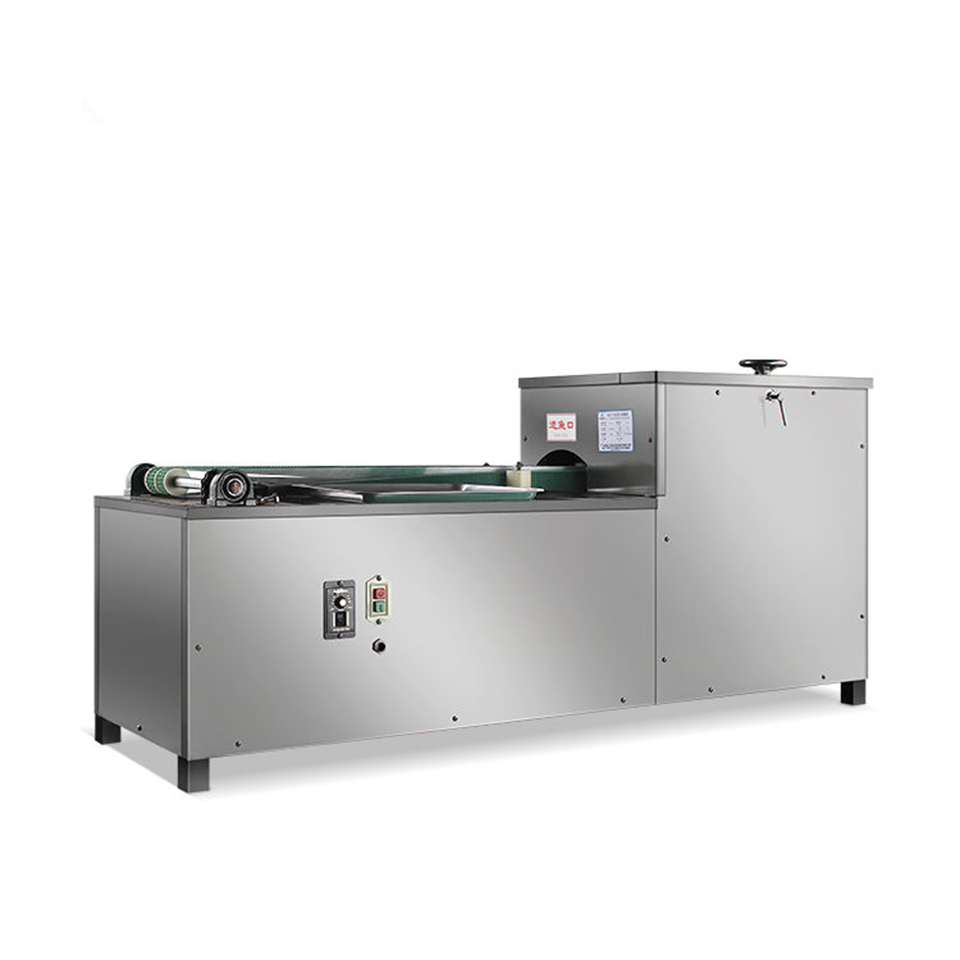
The 1650 mm working length of the washer decides how many fish pass at once. Slow the feed for larger fish, otherwise they turn sideways in the drum and come out still bloody. Follow the washer with a drain table or a vibrating screen. Do not drop fish straight into a crate; water collects at the bottom and comes back up.
Hygiene: three places to look
First, welds. Continuous weld on contact surfaces, pickled and passivated, no slag pockets. Dried blood in a crevice is tomorrow's smell. Second, drainage. Lift the base at least 100 mm off the floor, slope the floor to the gully, and make sure wash water cannot run back. Third, removable parts. Knife set, infeed channel and hold-down wheel should come off by hand. Time the strip-down. Anything over 15 minutes and the crew will skip it.
GB 14881-2013 covers food contact surfaces and clean zones. GB 20941-2016 is the hygiene code for aquatic product processing. GB 4806.9-2016 covers metal migration. Ask for the material certificate and test report, not a verbal "food grade".
Six acceptance checks
| Check | Method | Suggested pass mark |
|---|---|---|
| No-load current | Clamp meter, each phase | Within nameplate rating |
| Noise | 2 m from machine, 1 m high | ≤ 85 dB(A) |
| Pass rate | 100 fish, continuous | ≥ 98% |
| Damage rate | 100 fish from the same batch | ≤ 2% |
| Viscera residue | 20 fish, opened and checked | No visible residue |
| Strip-down time | One person, knife set | ≤ 15 minutes |
Treat these as the entry gate for the acceptance sheet, then agree final figures against your species and your customer's standard. Use your own fish on the day. Supplier sample fish hide everything.
Export power, crating, paperwork
The XZ-160 accepts 220V or 380V. The FK-500 and the washer are 220V. For 110V or 60Hz destinations, confirm in writing before the order, and change motor, control box and plug together. A plug swap alone will not turn at the other end. Ship in a wooden crate with a moisture barrier, fix the knife set separately, and add desiccant. The datasheets list CE, FDA and ISO 9001; ask for certificate numbers and expiry dates and check them yourself.
As of 2026, fish processing orders are getting smaller and more mixed: short batches, more species, frequent changeover. Do not size only for peak throughput. Strip-down time and knife changeover time are what eat the shift every day.
Questions buyers ask
Q: How do I size a line for 5 t per day?
A: Five tonnes over eight hours is 625 kg/h. At 1 kg average that is 625 fish/h, so two FK-500 units, or one unit plus two hours of overtime. Match the gutting and washing stations to the same beat; adding only a killing machine does not help.
Q: Can it handle fish under 0.5 kg?
A: The FK-500 is rated 1–8 jin (0.5–4 kg). Below 0.5 kg, fit a smaller infeed channel and hold-down wheel, and run 20 sample fish first to check pass rate and damage.
Q: Is 304 stainless enough?
A: 304 is the minimum for contact surfaces, with pickled and passivated welds. In saltwater rooms or high-salt plants, specify 316L for bearing housings and fasteners. GB 4806.9-2016 applies to metal migration, so material certificates should travel with the machine.
Q: What about 110V or 60Hz destinations?
A: The XZ-160 is dual voltage as standard. The FK-500 and the washer are 220V, so write the destination voltage and frequency into the contract and change motor and controls together.
Q: Do I need iced water in the wash section?
A: Yes. GB 2733-2015 keeps chilled fish at 0–4°C, and an ice-water mix is the steadiest way to hold it. Control it with ice rate and inlet flow, and check with a probe at several points on the first shift, not just the return water.
Related equipment and pages
- FK-500 fish killing machine: 500 fish/h, 1.1 kW, 1–8 jin, built for the front of a small or mid-size fish line.
- XZ-160 fish gutting machine: 2.2/1.5 kW, dual voltage, 850×670×850 mm, 130 kg, knife set matched to body length.
- Horizontal fish washing machine: 1650 mm working length, 220V/50Hz, 110 kg, sits after the gutting station.
- Fish processing equipment: killing, gutting and washing machines in one place for line matching.
- Meat and bone saws: for frozen fish and bone-in cutting alongside the wash line.
- Contact us: send shift output, fish size, water quality and power supply, and we will size the line.
Author: 苏涛;舜翔央厨、华艺智能