
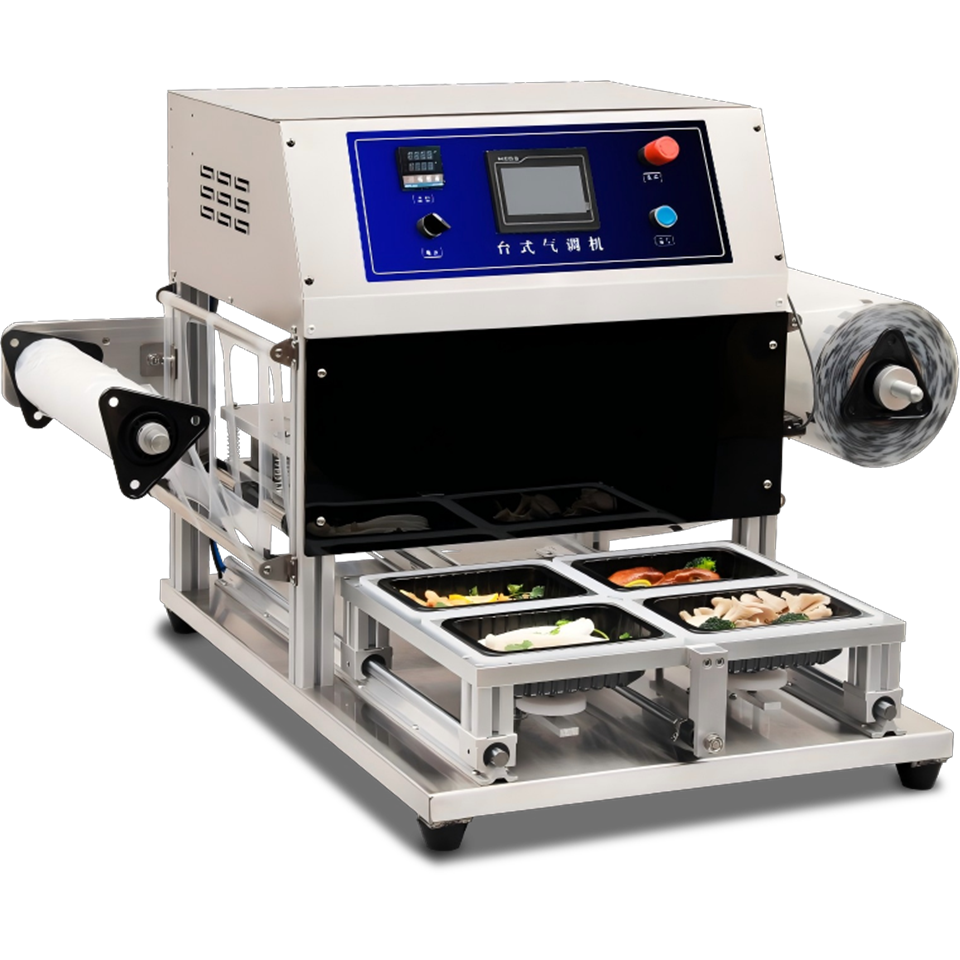
A 2026 buyer checklist for MAP tray sealers, covering film width, sealing cycle, gas flushing, temperature control, hygiene design, FAT records, and model comparison.
Shunxiang Central Kitchen serves central kitchen, prepared food, and food processing projects with practical equipment selection and engineering support. For export buyers in 2026, a MAP tray sealer should not be checked only by cycle speed. Film width, tray sample, gas flushing, sealing temperature, hygiene structure, and FAT records decide whether the machine can run after arrival.
Main Buyer Question
The real question is: before ordering a MAP tray sealer, what should be verified so the buyer does not receive a machine that seals only one sample tray but fails on daily packaging materials?
Key Takeaways
- Effective output equals tray cavities multiplied by stable cycles, not empty machine speed.
- Common film width choices include 260mm, 320mm, 370mm, 430mm, and 440mm.
- FAT records should include tray batch, film batch, temperature setting, cycle count, and leakage checks.
- Food contact areas should be easy to clean and preferably made with 304 stainless steel.
Parameter Table
| Item | Typical Check Point | Why It Matters |
|---|---|---|
| Film width | 260-440mm range | Controls usable tray size and future package changes |
| Cycle speed | 5-8 cycles/min or 360-1200 boxes/hour | Used for shift output calculation |
| Power supply | 220V single phase or 380V three phase | Must match local plant power |
| Sealing temperature | Set according to film material | Prevents weak seals and burned edges |
| Contact surface | 304 stainless steel preferred | Supports washdown and hygiene control |
Model Comparison
| Option | Best Fit | Buyer Risk |
|---|---|---|
| DQ370T-E tabletop MAP sealer | Sample room, small batch cooked food, retail meal packs | Capacity and tray size must be confirmed early |
| DQ320L-E vertical MAP sealer | Central kitchen shifts and vegetable packaging | Gas source, power, and drainage need layout review |
| 370mm pneumatic tray sealer | Standard tray sealing without modified atmosphere | It should not replace MAP when gas flushing is required |
Related Hymic Products
This article connects to the DQ370T-E tabletop MAP sealer, DQ430T-E tabletop MAP sealer, DQ320L-E vertical MAP sealer, and 370mm pneumatic tray sealer on hymic.com. Buyers should compare tray size, film width, power supply, gas connector, and cleaning access before locking a specification.
FAT and Hygiene Checks
During FAT, run the machine for at least 30 minutes before judging seal quality. Check leakage, seal edge, tray positioning, temperature stability, and film cutting. For food contact safety, GB 4806.1-2016 and GB 31654-2021 are useful reference standards for material safety and clean processing practice.
Buyer Checklist
- Send at least three real tray samples, including the largest and deepest tray.
- Use the buyer's real sealing film during FAT.
- Record sealing temperature, cycle count, and leakage test results.
- Confirm gas connector, air source, exhaust position, and local electrical requirements.
- Prepare spare heating bars, silicone pads, cutting knives, and sealing rings.
FAQ
1. What is the difference between MAP and standard tray sealing?
MAP sealing controls gas inside the tray through vacuum or gas flushing. Standard tray sealing only applies heat sealing and cannot replace MAP when shelf life or oxidation control is required.
2. How should buyers choose film width?
Choose film width by the largest tray outside dimension, then leave space for future tray changes. Common choices include 260mm, 320mm, 370mm, 430mm, and 440mm.
3. Should oxygen residue be checked during FAT?
If the contract includes modified atmosphere packaging, oxygen residue or gas flushing records should be checked. Without data, shelf-life disputes are hard to trace.
4. Why does hygiene design matter?
Tray support, sealing plate, drainage gaps, and film cutting areas collect moisture and debris. Cleanable stainless surfaces reduce sanitation risk in daily production.
Final specifications should follow the selected model, project requirements, and supplier technical documents. Buyers can review related MAP tray sealing models on hymic.com before confirming a purchase specification.